Creating effective quizzes is both an art and a science. Whether you're an educator looking to assess student understanding or a trainer developing professional development materials, following these best practices will help you create quizzes that are engaging, fair, and truly measure learning outcomes.
1. Start with Clear Learning Objectives
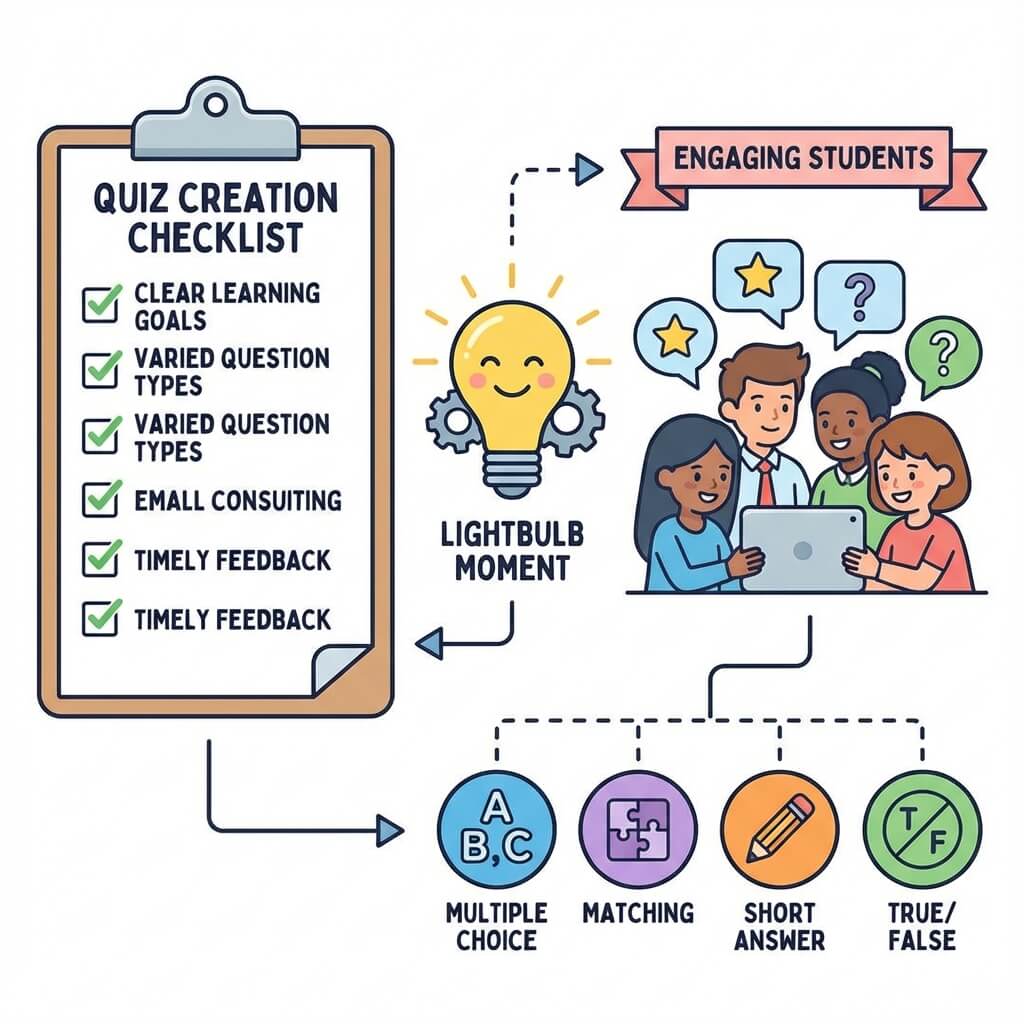
Before writing a single question, define what you want to assess. Each question should align with specific learning objectives. This ensures your quiz measures what students actually learned, not just what they can guess.
2. Use Varied Question Types
Mix different question formats to assess various levels of understanding. Combine multiple choice, true/false, fill-in-the-blank, and short answer questions to create a comprehensive assessment.
- Multiple choice for factual recall
- True/false for quick concept checks
- Fill-in-the-blank for terminology
- Short answer for deeper understanding
- Matching for relationship recognition
3. Write Clear and Concise Questions
Avoid ambiguous language and double negatives. Each question should test one concept only. Students should be able to understand what's being asked without confusion.
4. Create Plausible Distractors
For multiple choice questions, all options should be realistic. Avoid obviously wrong answers that make guessing too easy. Good distractors are based on common misconceptions.
"The best quiz questions reveal what students know and what they still need to learn."
— Dr. James Morrison, Assessment Expert
5. Include Feedback for Learning
Provide explanations for correct and incorrect answers. This transforms quizzes from pure assessment tools into learning opportunities. Students benefit most when they understand why an answer is right or wrong.
6. Balance Difficulty Levels
Include a mix of easy, medium, and challenging questions. Start with easier questions to build confidence, then progress to more complex ones. This keeps students engaged and motivated.
7. Time Appropriately
Allow sufficient time for thoughtful responses without creating anxiety. A good rule of thumb is 1-2 minutes per multiple choice question and 3-5 minutes for short answer questions.
8. Test Your Quiz Before Deployment
Always pilot your quiz with a small group first. Look for confusing questions, technical issues, and timing problems. Feedback from a test run helps refine the final product.
9. Make It Accessible
Ensure your quiz is accessible to all learners. Use clear fonts, provide alt text for images, and consider accommodations for students with different needs.
10. Analyze Results and Iterate
After the quiz, review the data. Which questions did students struggle with? Are there patterns in wrong answers? Use this information to improve both your quizzes and your teaching.
Leverage AI for Better Quizzes
Tools like AdvanceQuiz can help you implement these best practices automatically. AI-powered quiz generation ensures consistent quality, varied question types, and appropriate difficulty levels—all while saving you hours of work.
Ready to Transform Your Quiz Creation?
Join thousands of educators using AI to create engaging assessments in seconds.
Get Started Free